A team led by Professor ZHANG Lijun from the School of Materials Science and Engineering at Jilin University (JLU), in collaboration with Nanjing University and the University of Cambridge, has made a breakthrough in optimizing the electron transport layer (ETL) interface for all-perovskite tandem solar cells.
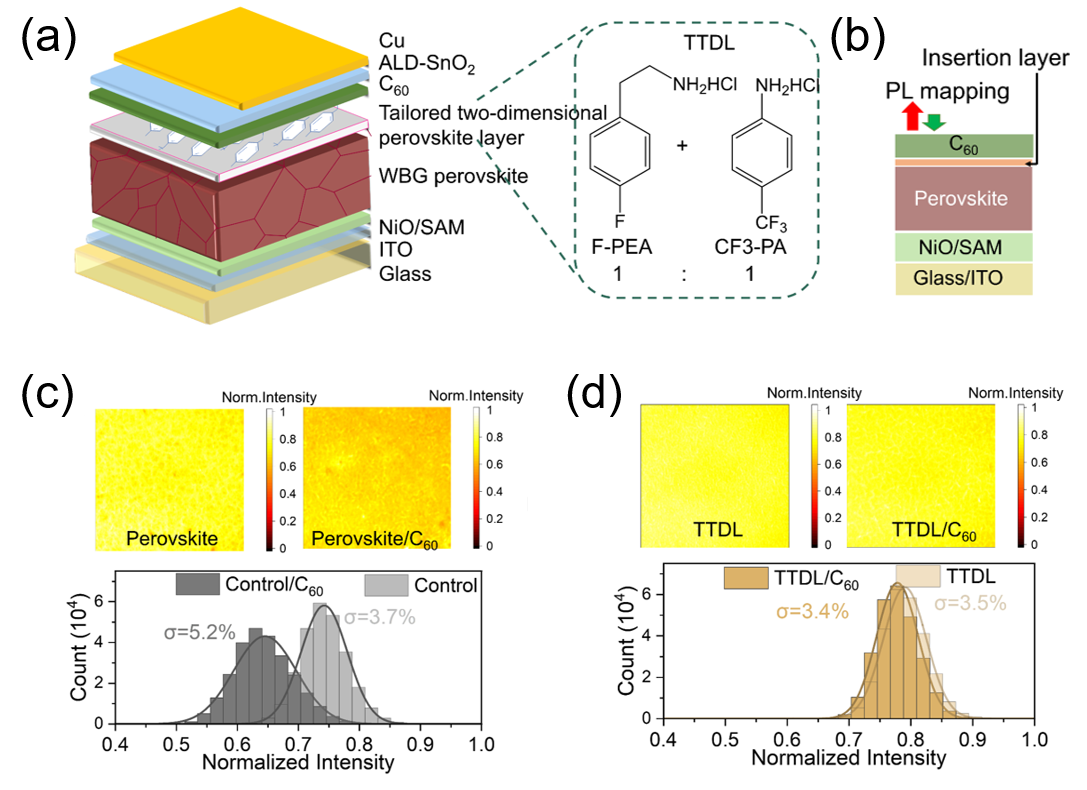
Their research, titled Homogenized contact in all-perovskite tandems using tailored 2D perovskite, was published in Nature on Oct 14, 2024.
The study addresses the efficiency gap between large-area and small-area solar cell devices, proposing an innovative solution by using customized 2D perovskite intercalation materials to optimize the ETL interface and improve electron extraction and transport efficiency.
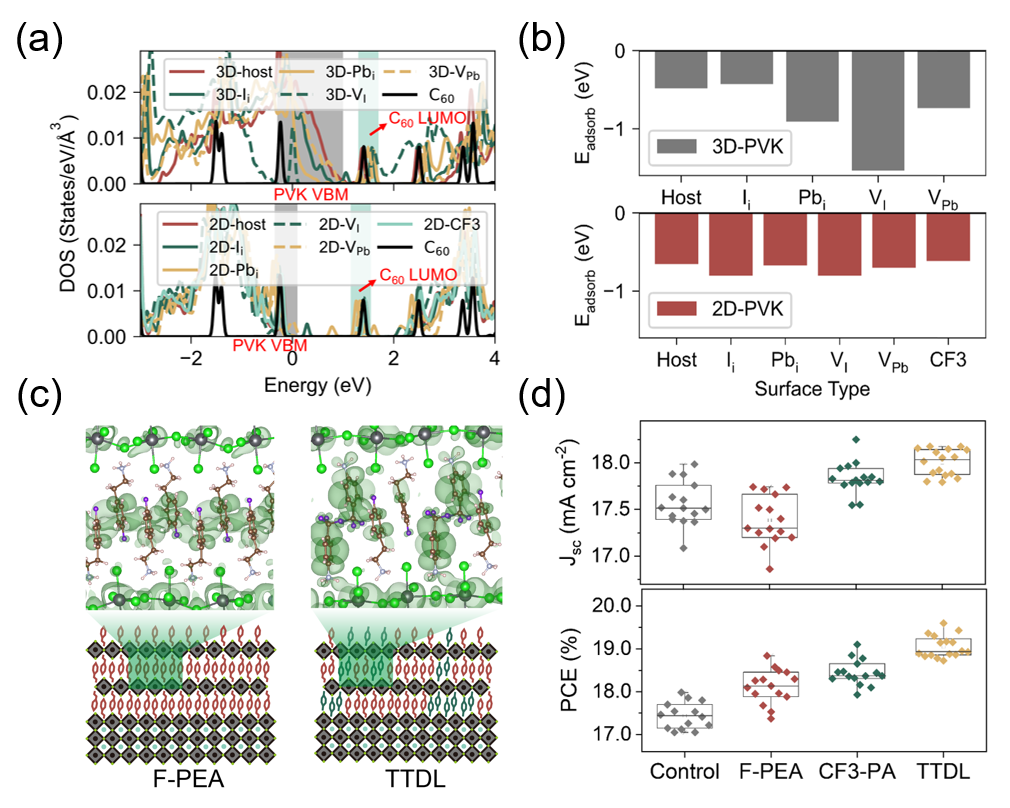
The team introduced a mixture of 4-fluorophenethylamine (F-PEA) and 4-trifluoromethyl-phenylammonium (CF3-PA) to form a tailored 2D perovskite layer, effectively resolving issues of ETL interface non-uniformity and poor contact quality.
Experimental results showed that 1.05-square-centimeter all-perovskite tandem solar cells, based on this optimized design, achieved a record-certified power delivering efficiency of 28.2 percent. This efficiency represents a new world record for this device size and has been included in the Solar Cell Efficiency Tables.
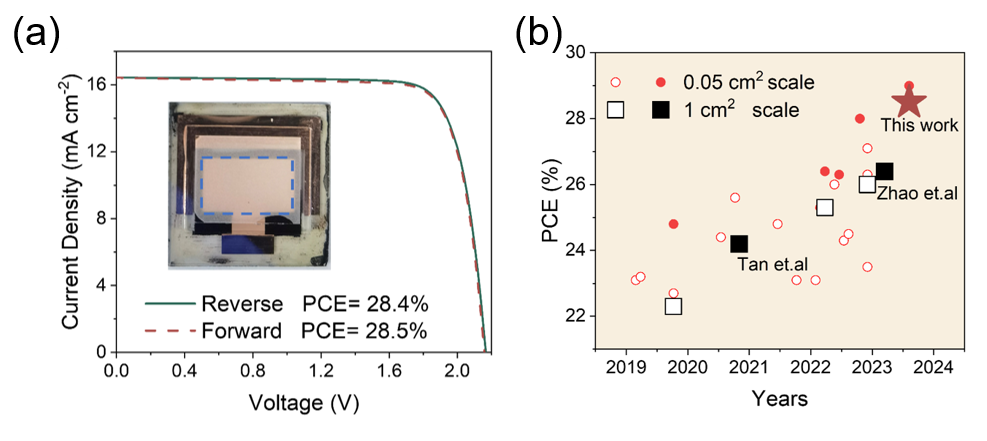
This study is the first to reveal the impact of poor ETL interface homogeneity on the efficiency of large-area perovskite solar cells and provides a solution to this issue. It lays a solid foundation for the commercialization of perovskite photovoltaic modules.