WANG Zhiwei, a postdoctoral fellow from the College of Physics at Jilin University (JLU), alongside Professor Samuel Braunstein from the University of York, has achieved a breakthrough in the study of whether the universe is suitable for life.
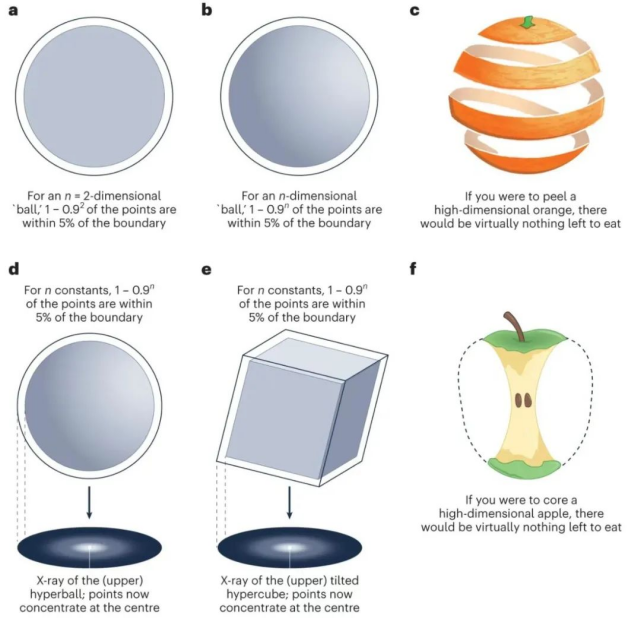
Their research paper, Sciama's Argument on Life in a Random Universe and Distinguishing Apples from Oranges, was published in Nature Astronomy, one of the world's most authoritative astronomical journals.
Physicists have long pondered why the universe seems "perfectly" tuned for life. Scientists believe that if the universe's fundamental constants were slightly different, evolution would be drastically altered, and life would likely not exist. This phenomenon is known as the "fine-tuned universe". However, if the universe's fundamental constants were randomly chosen, the emergence of life would be almost impossible.
Professor Dennis Sciama, one of the founding figures of modern cosmology, proposed that if the universe were random, the probability of life like ours emerging would be extremely low. With the rise of unified theories such as string theory, the idea of a random universe has gradually gained acceptance.
WANG and Professor Braunstein's research suggests that unless we fully understand the universe's fundamental constants, we might mistakenly assume that the universe is designed for life. A deeper understanding could shift this view, revealing instead the remarkably low probability of life's existence. Their study offers a fresh perspective on the long-standing Fermi Paradox.
WANG is both the first author and corresponding author of this paper, with JLU's College of Physics listed as the primary institution.